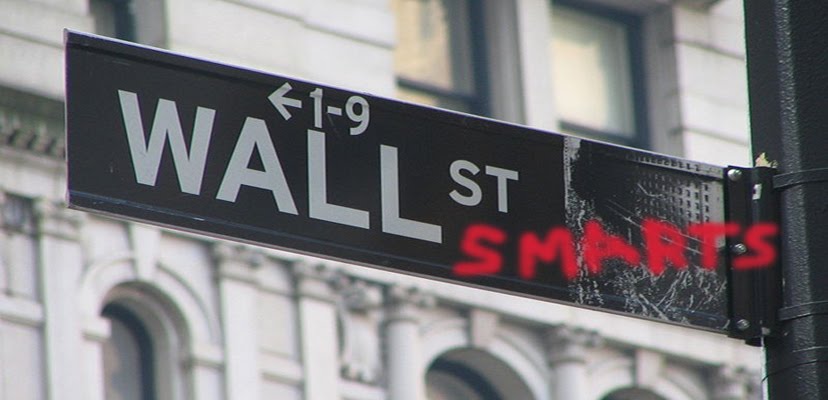
WALL STREET SMARTS, THE BLOG, IS NOW WALL STREET SMARTS, THE BOOK. FULLY EDITED AND REVISED WITH NEW MATERIAL ON AMAZON
I posted the first blog on Wall Street Smarts
on November 1, 2010. During the first year, there were more than 2,200
visits from people in 54 countries. Since November, 2011, there have been another 4,625 visits from folks in the original 54 countries and readers from following additional
countries (alphabetical order):
Algeria Austria Barbados
Botswana Brunei Bulgaria
Cambodia Chile Czech Republic
Columbia Denmark Dominican Republic
El Salvador Ethiopia Gabon Honduras Iceland Israel
Jordan Kuwait Lebanon
Luxembourg Macedonia Mauritius
Nepal Norway Panama
Paraguay Rwanda Saudi Arabia
Serbia Slovakia Trinidad & Tobago
Uganda Venezuela Vietnam
Zimbabwe
Heartfelt thanks to all 6,825 of you for supporting my blog. I apologize for the staggered columns in this one, but I can't seem to straighten them out.
We will return to a regular blog next Monday.
Monday, October 29, 2012

Monday, October 22, 2012
The Dark Side of Markets (3)
WALL STREET SMARTS, THE BLOG, IS NOW WALL STREET SMARTS, THE BOOK. FULLY EDITED AND REVISED WITH NEW MATERIAL ON AMAZON
We will continue the description of a "manipulation" by Larry Livingston to sell a large block of stock, as recounted in Edwin Lefevre's Reminiscences of a Stock Operator. The last blog ended with him starting his campaign by generating trading activity in the stock to attract the attention of the professional traders on the floor of the exchange (the New York Stock Exchange, in this case). We will pick up the story at that point.
To get a professional following, I myself have never had to do more than to make a stock active. Traders don't ask for more. It is well, of course, to remember that these professionals on the floor of the Exchange buy stocks with the intention of selling them at a profit. They do not insist on its being a big profit; but it must be a quick profit.
I make the stock active in order to draw the attention of speculators to it, for the reasons I have given. I buy it and I sell it and the traders follow suit. The selling pressure is not apt to be strong where a man has as much speculatively held stock sewed up -- in calls -- as I insist on having. The buying, therefore, prevails over the selling, and the public follows the lead not so much of the manipulator as of the room traders. This highly desirable demand I fill -- that is, I sell stock on balance. If the demand is what it ought to be it will absorb more than the amount of stock I was compelled to accumulate in the earlier stages of the manipulation; and when this happens I sell the stock short -- that is technically. In other words, I sell more stock than I actually hold. It is perfectly safe for me to do so since I am really selling against my calls. Of course, when the demand from the public slackens, the stock ceases to advance. Then I wait.
Say, then, the stock has ceased to advance. Whatever the reason may be, my stock starts to go down. Well, I begin to buy it. I give it the support that a stock ought to have if it is good odour with its own sponsors. And more: I am able to support it without accumulating it -- that is, without increasing the amount I shall have to sell later on. Of course what I am really doing is covering the stock I sold short at higher prices when the demand from the public or from the traders or from both enabled me to do it. It is always well to make it plain to the traders -- and to the public, also -- that there is a demand for the stock on the way down.
As the market broadens I of course sell stock on the way up, but never enough to check the rise. It is obvious that the more stock I sell on a reasonable and orderly advance the more I encourage the conservative speculators, who are more numerous that the reckless room traders; and in addition the more support I shall be able to give the stock on the inevitable weak days. By always being short, I always am in a position to support the stock without danger to myself. As a rule I begin my selling at a price that will show me a profit. but I often sell without having a profit, simply to create or to increase what I may call my riskless buying power. My business is not alone to put up the price or to sell a big block of stock for a client but to make money for myself. That is why I do not ask any clients to finance my operations. My fee is contingent upon my success.
I repeat that at no time during the manipulation do I forget to be a stock trader. My problems as a manipulator, after all, are the same that confront me as an operator. All manipulation comes to an end when the manipulator cannot make a stock do what he wants it to do. When the stock you are manipulating doesn't act as it should, quit. Don't argue with the tape. Do not seek to lure the profit back. Quit while the quitting is good -- and cheap.
The book also contains an account of an actual stock that the operator, the fictional Larry Livingston, manipulated. This is yet another reason for you to read this classic of investment literature.
In January, 2011, I wrote a series of blogs in which I introduced my readers to various financial terms by chronicling the organization of a fictional business, Best Blogs Ever, Inc., and the story of its operations and financial growth. I did not conclude the story at that time, but promised to do so at a later date. That time has arrived.
Excerpts from Reminiscences of a Stock Operator, Edwin Lefevre, copyright 1923, republished by John Wiley & Sons, Inc. in the Wiley Investment Classics series, pages 248 - 250
Comments are always welcome.
We will continue the description of a "manipulation" by Larry Livingston to sell a large block of stock, as recounted in Edwin Lefevre's Reminiscences of a Stock Operator. The last blog ended with him starting his campaign by generating trading activity in the stock to attract the attention of the professional traders on the floor of the exchange (the New York Stock Exchange, in this case). We will pick up the story at that point.
To get a professional following, I myself have never had to do more than to make a stock active. Traders don't ask for more. It is well, of course, to remember that these professionals on the floor of the Exchange buy stocks with the intention of selling them at a profit. They do not insist on its being a big profit; but it must be a quick profit.
I make the stock active in order to draw the attention of speculators to it, for the reasons I have given. I buy it and I sell it and the traders follow suit. The selling pressure is not apt to be strong where a man has as much speculatively held stock sewed up -- in calls -- as I insist on having. The buying, therefore, prevails over the selling, and the public follows the lead not so much of the manipulator as of the room traders. This highly desirable demand I fill -- that is, I sell stock on balance. If the demand is what it ought to be it will absorb more than the amount of stock I was compelled to accumulate in the earlier stages of the manipulation; and when this happens I sell the stock short -- that is technically. In other words, I sell more stock than I actually hold. It is perfectly safe for me to do so since I am really selling against my calls. Of course, when the demand from the public slackens, the stock ceases to advance. Then I wait.
Say, then, the stock has ceased to advance. Whatever the reason may be, my stock starts to go down. Well, I begin to buy it. I give it the support that a stock ought to have if it is good odour with its own sponsors. And more: I am able to support it without accumulating it -- that is, without increasing the amount I shall have to sell later on. Of course what I am really doing is covering the stock I sold short at higher prices when the demand from the public or from the traders or from both enabled me to do it. It is always well to make it plain to the traders -- and to the public, also -- that there is a demand for the stock on the way down.
As the market broadens I of course sell stock on the way up, but never enough to check the rise. It is obvious that the more stock I sell on a reasonable and orderly advance the more I encourage the conservative speculators, who are more numerous that the reckless room traders; and in addition the more support I shall be able to give the stock on the inevitable weak days. By always being short, I always am in a position to support the stock without danger to myself. As a rule I begin my selling at a price that will show me a profit. but I often sell without having a profit, simply to create or to increase what I may call my riskless buying power. My business is not alone to put up the price or to sell a big block of stock for a client but to make money for myself. That is why I do not ask any clients to finance my operations. My fee is contingent upon my success.
I repeat that at no time during the manipulation do I forget to be a stock trader. My problems as a manipulator, after all, are the same that confront me as an operator. All manipulation comes to an end when the manipulator cannot make a stock do what he wants it to do. When the stock you are manipulating doesn't act as it should, quit. Don't argue with the tape. Do not seek to lure the profit back. Quit while the quitting is good -- and cheap.
The book also contains an account of an actual stock that the operator, the fictional Larry Livingston, manipulated. This is yet another reason for you to read this classic of investment literature.
In January, 2011, I wrote a series of blogs in which I introduced my readers to various financial terms by chronicling the organization of a fictional business, Best Blogs Ever, Inc., and the story of its operations and financial growth. I did not conclude the story at that time, but promised to do so at a later date. That time has arrived.
Excerpts from Reminiscences of a Stock Operator, Edwin Lefevre, copyright 1923, republished by John Wiley & Sons, Inc. in the Wiley Investment Classics series, pages 248 - 250
Comments are always welcome.
Monday, October 15, 2012
The Dark Side of Markets (2)
WALL STREET SMARTS, THE BLOG, IS NOW WALL STREET SMARTS, THE BOOK. FULLY EDITED AND REVISED WITH NEW MATERIAL ON AMAZON
In his classic, Reminiscences of a Stock Operator, Edwin Lefevre tells the story of a market trader named Larry Livingston, who, in reality, was Jesse Lauriston Livermore, a famous market trader of the 1920s. In the book, the operator, Livingston, recounts several market manipulations he was involved in over the years. I should point out that, at that time, there were few rules in effect concerning various market strategies which today would violate securities laws and the rules of the Securities & Exchange Commission. In any event, the following is a sort of road map for moving large blocks of stock in the bad good old days or the good bad old days, depending on your perspective. Several times over his market career, Livingston was hired by people to sell their large blocks of stock for them without affecting the price. Remember the basic rule governing share prices: supply and demand. If a large number of shares are offered for sale at one time, the price will drop and the seller's profits vanish. Here is what Mr. Livingston had to say:
The word "manipulation" has come to have an ugly sound. It needs an alias. I do not think there is anything so very mysterious or crooked about the process itself when it has for an object the selling of a stock in bulk, provided, of course, that such operations are not accompanied by misrepresentation. Usually the object of manipulation is to develop marketability -- that is, the ability to dispose of fair-sized blocks at some price at any time.
In the majority of cases the object of manipulation is, as I said, to sell stock to the public at the best possible price. It is not alone a question of selling, but of distributing. There is no sense in marking up the price to a very high level if you cannot induce the public to take it off your hands later. Let me start at the beginning. Assume that there is some one --an underwriting syndicate or a pool or an individual --that has a block of stock which it is desired to sell at the best price possible. The best place for selling it ought to be the open market, and the best buyer ought to be the general public. Suppose he has heard of me as a man who knows the game. Well, I take it that he tries to find out all he can about me. He then arranges for an interview, and in due time calls at my office. My visitor tells me what he and his associates wish to do, and asks me to undertake the deal.
I generally ask and receive calls (call options) on a block of stock. I insist upon graduated calls as the fairest to all concerned. The price of the call begins at a little below the prevailing market price and goes up; say, for example, that I get calls on one hundred thousand shares and the stock is quoted at 40. I begin with a call for some thousands of shares at 35, another at 37, another at 40, and at 45 and 50, and so on up to 75 or 80. If as the result of my professional work -- my manipulation -- the price goes up, and if at the highest level there is a good demand for the stock so that I can sell fair-sized blocks of it I of course call the stock. I am making money; but so are my clients making money. This is as it should be.
The first step in a bull movement in a stock is to advertise the fact that there is a bull movement on. Sounds silly, doesn't it? Well, think a moment. it isn't as silly as it sounded, is it? The most effective way to advertise what, in effect, are your honorable intentions is to make the stock active and strong. After all is said and done, the greatest publicity agent in the wide world is the ticker, and by far the best advertising medium is the tape. I accomplish all these highly desirable things by merely making the stock active. When there is activity there is a synchronous demand for explanations; and that means, of course, that the necessary reasons -- for publication--supply themselves without the slightest aid from me.
Activity is all that the floor traders ask. They will buy or sell any stock at any level if only there is a free market for it. They will deal in thousands of shares wherever they see activity, and their aggregate capacity is considerable. It necessarily happens that they constitute the manipulator's first crop of buyers.
We will continue with this story in the next blog.
Excerpts from Reminiscences of a Stock Operator, Edwin Lefevre, copyright 1923, republished by John Wiley & Sons, Inc. in the Wiley Investment Classics series, pages 244 - 248
Comments are always welcome.
In his classic, Reminiscences of a Stock Operator, Edwin Lefevre tells the story of a market trader named Larry Livingston, who, in reality, was Jesse Lauriston Livermore, a famous market trader of the 1920s. In the book, the operator, Livingston, recounts several market manipulations he was involved in over the years. I should point out that, at that time, there were few rules in effect concerning various market strategies which today would violate securities laws and the rules of the Securities & Exchange Commission. In any event, the following is a sort of road map for moving large blocks of stock in the bad good old days or the good bad old days, depending on your perspective. Several times over his market career, Livingston was hired by people to sell their large blocks of stock for them without affecting the price. Remember the basic rule governing share prices: supply and demand. If a large number of shares are offered for sale at one time, the price will drop and the seller's profits vanish. Here is what Mr. Livingston had to say:
The word "manipulation" has come to have an ugly sound. It needs an alias. I do not think there is anything so very mysterious or crooked about the process itself when it has for an object the selling of a stock in bulk, provided, of course, that such operations are not accompanied by misrepresentation. Usually the object of manipulation is to develop marketability -- that is, the ability to dispose of fair-sized blocks at some price at any time.
In the majority of cases the object of manipulation is, as I said, to sell stock to the public at the best possible price. It is not alone a question of selling, but of distributing. There is no sense in marking up the price to a very high level if you cannot induce the public to take it off your hands later. Let me start at the beginning. Assume that there is some one --an underwriting syndicate or a pool or an individual --that has a block of stock which it is desired to sell at the best price possible. The best place for selling it ought to be the open market, and the best buyer ought to be the general public. Suppose he has heard of me as a man who knows the game. Well, I take it that he tries to find out all he can about me. He then arranges for an interview, and in due time calls at my office. My visitor tells me what he and his associates wish to do, and asks me to undertake the deal.
I generally ask and receive calls (call options) on a block of stock. I insist upon graduated calls as the fairest to all concerned. The price of the call begins at a little below the prevailing market price and goes up; say, for example, that I get calls on one hundred thousand shares and the stock is quoted at 40. I begin with a call for some thousands of shares at 35, another at 37, another at 40, and at 45 and 50, and so on up to 75 or 80. If as the result of my professional work -- my manipulation -- the price goes up, and if at the highest level there is a good demand for the stock so that I can sell fair-sized blocks of it I of course call the stock. I am making money; but so are my clients making money. This is as it should be.
The first step in a bull movement in a stock is to advertise the fact that there is a bull movement on. Sounds silly, doesn't it? Well, think a moment. it isn't as silly as it sounded, is it? The most effective way to advertise what, in effect, are your honorable intentions is to make the stock active and strong. After all is said and done, the greatest publicity agent in the wide world is the ticker, and by far the best advertising medium is the tape. I accomplish all these highly desirable things by merely making the stock active. When there is activity there is a synchronous demand for explanations; and that means, of course, that the necessary reasons -- for publication--supply themselves without the slightest aid from me.
Activity is all that the floor traders ask. They will buy or sell any stock at any level if only there is a free market for it. They will deal in thousands of shares wherever they see activity, and their aggregate capacity is considerable. It necessarily happens that they constitute the manipulator's first crop of buyers.
We will continue with this story in the next blog.
Excerpts from Reminiscences of a Stock Operator, Edwin Lefevre, copyright 1923, republished by John Wiley & Sons, Inc. in the Wiley Investment Classics series, pages 244 - 248
Comments are always welcome.
Monday, October 8, 2012
The Dark Side Of Markets (1)
WALL STREET SMARTS, THE BLOG, IS NOW WALL STREET SMARTS, THE BOOK. FULLY EDITED AND REVISED WITH NEW MATERIAL ON AMAZON
Any time you mix people, money and uncertain outcomes (sounds like Wall Street, doesn't it?), there will always be a certain number of those participants who look for the easy (illegal) way to make money. Bradbury Thurlow admitted that there were instances of Wall Street dishonesty when he touched on market shenanigans in his book, Rediscovering the Wheel: Contrary Thinking & Investment Strategy, as follows:
In the stock market practically everybody with any trading experience will feel he has been fleeced, not once but repeatedly. This does not mean that the market is filled with or run by unscrupulous people -- although there are always a few of those around waiting to take us in.*
Fred Schwed, Jr. also discussed the issue of fraud on Wall Street in his book, Where Are the Customers' Yachts? or A Good Hard Look At Wall Street. He felt that the public's widely held feeling that their losses were the result of dishonesty were overblown and, to a certain extent, self-serving. He wrote the following about the public's feelings about Wall Street:
The public feels that Wall Streeters are not dunces at all; that they are crooks and scoundrels and very clever ones at that; that they sell for millions what they know is worthless; in short, that they are villains, not children.
The burnt customer certainly prefers to believe that he has been robbed rather than that he has been a fool on the advice of fools. Even Wall Street men themselves tend to encourage the idea.
The crookedness of Wall Street is in my opinion an overrated phenomenon. The hearts of Wall Street men are not more or less black than the hearts of the men in the sausage-cover game. There is probably the same percentage of malpractice, but the Wall Street depredations are more spectacular. They involve vastly greater sums, and they make more interesting reading. Best of all, they suggest to the public an excuse for the public's own folly.**
Both men acknowledged the fact that fraud is, indeed, practiced on Wall Street; however, they felt that much larger losses were incurred much more frequently by thoughtless, emotional investing by the public. Schwed made the following comments concerning the Securities & Exchange Commission, established after the 1929 market crash and subsequent depression in the USA:
Wall Street needed the S.E.C. just like baseball after 1919 needed Commissioner Landis. But people who are interested in baseball are more realistic than people interested in Wall Street. The fans did not expect Judge Landis would do more for the game than keep it reasonably honest. They did not expect him to improve the quality of the fielding and hitting. Nevertheless, a considerable part of the public seems to be expecting the S.E.C. will make speculation and investment safer.
These hopeful individuals are reminiscent of the benevolent soul who said at the beginning of the poker game, "Now, boys, if we all play carefully we can all win a little." **
In the next blog, we will look at a classic form of market manipulation, what would be frowned upon by the securities regulators today, but was fairly common in the 1920s.
* Excerpt from Rediscovering the Wheel: Contrary Thinking & Investment Strategy, Bradbury K. Thurlow, copyright ©1981, published by Fraser Publishing Company, is used by permission of the current copyright holder.
**Excerpts from Where Are the Customer's Yachts? or A Good Hard Look At Wall Street, Fred Schwed, Jr., copyright © 1940, republished by John Wiley & Sons, Inc, pages 195-196 & 211-212
Comments are always welcome.
Any time you mix people, money and uncertain outcomes (sounds like Wall Street, doesn't it?), there will always be a certain number of those participants who look for the easy (illegal) way to make money. Bradbury Thurlow admitted that there were instances of Wall Street dishonesty when he touched on market shenanigans in his book, Rediscovering the Wheel: Contrary Thinking & Investment Strategy, as follows:
In the stock market practically everybody with any trading experience will feel he has been fleeced, not once but repeatedly. This does not mean that the market is filled with or run by unscrupulous people -- although there are always a few of those around waiting to take us in.*
Fred Schwed, Jr. also discussed the issue of fraud on Wall Street in his book, Where Are the Customers' Yachts? or A Good Hard Look At Wall Street. He felt that the public's widely held feeling that their losses were the result of dishonesty were overblown and, to a certain extent, self-serving. He wrote the following about the public's feelings about Wall Street:
The public feels that Wall Streeters are not dunces at all; that they are crooks and scoundrels and very clever ones at that; that they sell for millions what they know is worthless; in short, that they are villains, not children.
The burnt customer certainly prefers to believe that he has been robbed rather than that he has been a fool on the advice of fools. Even Wall Street men themselves tend to encourage the idea.
The crookedness of Wall Street is in my opinion an overrated phenomenon. The hearts of Wall Street men are not more or less black than the hearts of the men in the sausage-cover game. There is probably the same percentage of malpractice, but the Wall Street depredations are more spectacular. They involve vastly greater sums, and they make more interesting reading. Best of all, they suggest to the public an excuse for the public's own folly.**
Both men acknowledged the fact that fraud is, indeed, practiced on Wall Street; however, they felt that much larger losses were incurred much more frequently by thoughtless, emotional investing by the public. Schwed made the following comments concerning the Securities & Exchange Commission, established after the 1929 market crash and subsequent depression in the USA:
Wall Street needed the S.E.C. just like baseball after 1919 needed Commissioner Landis. But people who are interested in baseball are more realistic than people interested in Wall Street. The fans did not expect Judge Landis would do more for the game than keep it reasonably honest. They did not expect him to improve the quality of the fielding and hitting. Nevertheless, a considerable part of the public seems to be expecting the S.E.C. will make speculation and investment safer.
These hopeful individuals are reminiscent of the benevolent soul who said at the beginning of the poker game, "Now, boys, if we all play carefully we can all win a little." **
In the next blog, we will look at a classic form of market manipulation, what would be frowned upon by the securities regulators today, but was fairly common in the 1920s.
* Excerpt from Rediscovering the Wheel: Contrary Thinking & Investment Strategy, Bradbury K. Thurlow, copyright ©1981, published by Fraser Publishing Company, is used by permission of the current copyright holder.
**Excerpts from Where Are the Customer's Yachts? or A Good Hard Look At Wall Street, Fred Schwed, Jr., copyright © 1940, republished by John Wiley & Sons, Inc, pages 195-196 & 211-212
Comments are always welcome.
Monday, October 1, 2012
The Computer: Investment Tool Or Time Bomb (3)
WALL STREET SMARTS, THE BLOG, IS NOW WALL STREET SMARTS, THE BOOK. FULLY EDITED AND REVISED WITH NEW MATERIAL ON AMAZON
One of the largest financial disasters which can be traced to computer investing/trading in the 1990s was the collapse of the hedge fund, Long-Term Capital Management ("LTCM"). LTCM was organized in February, 1994 with a $1.25 billion equity base, raised from wealthy investors and financial institutions by a group of Wall Street professionals and several Nobel Laureate economists. These disparate individuals combined to create a computer trading and hedging program which focused on the differences between interest rates on various types of bonds. Those differences are called "spreads." Two famous economists, Robert C. Merton of Harvard, and Myron S. Scholes, one of the developers of the Black-Scholes model for pricing options, were initial partners in LTCM. They were proponents of the Efficient Market Hypothesis, popularly called the Random Walk Theory. We have looked at this investment theory in a past blog.
The fund's initial investment strategy was based on the theory that any unusual spreads between the interest rates of different bonds would, in a rational and efficient market, ultimately narrow and converge. LTCM's computers were programed to seek out and identify these spreads, which allowed LTCM to take market positions in the bonds which would be profitable if and when those spreads narrowed as predicted. When LTCM started, it was the only market player investing in such a way, which resulted in its spectacular early success. Based on that success, LTCM was able to borrow billions of dollars from large banks in order to make its investments on margin. Its early annual returns on equity were astronomical (28% in its first year of operation and 59% in 1995 before fees). Such returns led to more money coming in from investors and more money made available from lenders, a sort of virtuous circle.
There is an old saying that "imitation is the best form of flattery." As is so often the case, LTCM's success on Wall Street attracted attention and led other market professionals and their companies to figure out and copy LTCM's profitable trading strategy. Soon there were many funds and traders playing LTCM's game. This led to problems for LTCM because, with the new competition, it was more difficult to establish positions and profit from the spreads which LTCM previously had all to itself. As a result, LTCM started to trade other financial assets, hoping to garner the same profits as in the past including an asset called equity volatility (which is too complicated for me to understand other than to say it was a naked bet not an investment).
Unfortunately, expanding its trading horizons was not the answer. One of these new trades by LTCM was in Russian bonds. They believed that Russia would be able to pay its bonds, a belief they held right up to August 17, 1998, when the Russian government announced a debt moratorium and defaulted on its bonds. At this point, to make matters worse, Russia also devalued its currency, the ruble, which LTCM had also bet would not happen. During this time of market turmoil, almost all the other trades LTCM had set in place also turned against them. Since LTCM used so much leverage (margin loans at a ratio of $28 debt to $1 equity in 1997), its losses were staggering. It all came to a grinding halt for LTCM in August, 1998. Bond spreads had increased to levels never seen before, much wider than the computers at LTCM had been programmed to anticipate. LTCM lost $1.9 billion of its capital in one month. Its remaining capital, $2.8 billion was dwarfed by its $125 billion of assets. These numbers do not include the other LTCM positions in derivatives and swap spreads, which added to its unsustainable debt load. To make matters worse, the loans which had been so freely extended early on were being called and finding new loans became impossible, all at the worst possible moment for the fund.
There is a hard truth about lending money. If you lend someone $1,000, you are a creditor; however, if you lend someone $100 million, you are a partner. As LTCM moved ever closer to the bankruptcy cliff, it became apparent to everyone on Wall Street and in the Federal Reserve that a collapse of LTCM would have devastating effects upon the financial system, not only in the US, but around the world. It had so many outstanding trades with so many other institutions that its failure would have damaging ripple effects around the world. By September 21, LTCM had racked up additional losses of $553 million, and the markets continued to move against its trading positions. Something had to be done. The Federal Reserve brought together the biggest investment firms on Wall Street, including LTCM's lenders, in emergency meetings over several days to address the problems. The Fed forged an agreement which, with other countries, would provide $3.65 billion in equity to LTCM, which with its remaining $400 million in equity, would provide the fund with the needed capital to remain in existence until it could be liquidated in an orderly fashion.
The entire saga of LTCM is told in remarkable detail by Roger Lowenstein in his 2000 book, The Rise and Fall of Long-Term Capital Management, When Genius Failed. In summing up the little over four year run of LTCM with its arcane computer modeling and efficient market philosophy, Lowenstein said it best with the following:
Reared on Merton's and Scholes' teachings of efficient markets, the professors actually believed that prices would go and go directly where the models said they should. The professors' conceit was to think that models could forecast the limits of behavior. In fact, the models could tell them what was reasonable or what was predictable based on the past. The professors overlooked the fact that people, traders included, are not always reasonable. This is the true lesson of Long-Term's demise. No matter what the models say, traders are not machines guided by silicon chips; they are impressionable and imitative; they run in flocks and retreat in hordes.
The next time a Merton proposes an elegant model to manage risks and foretell odds, the next time a computer with a perfect memory of the past is said to quantify risks in the future, investors should run -- and quickly -- the other way.
Excerpts from The Rise and Fall of Long-Term Capital Management, When Genius Failed. Roger Lowenstein, copyright 2000, published by Random House, pages 234 & 235
Comments are always welcome.
One of the largest financial disasters which can be traced to computer investing/trading in the 1990s was the collapse of the hedge fund, Long-Term Capital Management ("LTCM"). LTCM was organized in February, 1994 with a $1.25 billion equity base, raised from wealthy investors and financial institutions by a group of Wall Street professionals and several Nobel Laureate economists. These disparate individuals combined to create a computer trading and hedging program which focused on the differences between interest rates on various types of bonds. Those differences are called "spreads." Two famous economists, Robert C. Merton of Harvard, and Myron S. Scholes, one of the developers of the Black-Scholes model for pricing options, were initial partners in LTCM. They were proponents of the Efficient Market Hypothesis, popularly called the Random Walk Theory. We have looked at this investment theory in a past blog.
The fund's initial investment strategy was based on the theory that any unusual spreads between the interest rates of different bonds would, in a rational and efficient market, ultimately narrow and converge. LTCM's computers were programed to seek out and identify these spreads, which allowed LTCM to take market positions in the bonds which would be profitable if and when those spreads narrowed as predicted. When LTCM started, it was the only market player investing in such a way, which resulted in its spectacular early success. Based on that success, LTCM was able to borrow billions of dollars from large banks in order to make its investments on margin. Its early annual returns on equity were astronomical (28% in its first year of operation and 59% in 1995 before fees). Such returns led to more money coming in from investors and more money made available from lenders, a sort of virtuous circle.
There is an old saying that "imitation is the best form of flattery." As is so often the case, LTCM's success on Wall Street attracted attention and led other market professionals and their companies to figure out and copy LTCM's profitable trading strategy. Soon there were many funds and traders playing LTCM's game. This led to problems for LTCM because, with the new competition, it was more difficult to establish positions and profit from the spreads which LTCM previously had all to itself. As a result, LTCM started to trade other financial assets, hoping to garner the same profits as in the past including an asset called equity volatility (which is too complicated for me to understand other than to say it was a naked bet not an investment).
Unfortunately, expanding its trading horizons was not the answer. One of these new trades by LTCM was in Russian bonds. They believed that Russia would be able to pay its bonds, a belief they held right up to August 17, 1998, when the Russian government announced a debt moratorium and defaulted on its bonds. At this point, to make matters worse, Russia also devalued its currency, the ruble, which LTCM had also bet would not happen. During this time of market turmoil, almost all the other trades LTCM had set in place also turned against them. Since LTCM used so much leverage (margin loans at a ratio of $28 debt to $1 equity in 1997), its losses were staggering. It all came to a grinding halt for LTCM in August, 1998. Bond spreads had increased to levels never seen before, much wider than the computers at LTCM had been programmed to anticipate. LTCM lost $1.9 billion of its capital in one month. Its remaining capital, $2.8 billion was dwarfed by its $125 billion of assets. These numbers do not include the other LTCM positions in derivatives and swap spreads, which added to its unsustainable debt load. To make matters worse, the loans which had been so freely extended early on were being called and finding new loans became impossible, all at the worst possible moment for the fund.
There is a hard truth about lending money. If you lend someone $1,000, you are a creditor; however, if you lend someone $100 million, you are a partner. As LTCM moved ever closer to the bankruptcy cliff, it became apparent to everyone on Wall Street and in the Federal Reserve that a collapse of LTCM would have devastating effects upon the financial system, not only in the US, but around the world. It had so many outstanding trades with so many other institutions that its failure would have damaging ripple effects around the world. By September 21, LTCM had racked up additional losses of $553 million, and the markets continued to move against its trading positions. Something had to be done. The Federal Reserve brought together the biggest investment firms on Wall Street, including LTCM's lenders, in emergency meetings over several days to address the problems. The Fed forged an agreement which, with other countries, would provide $3.65 billion in equity to LTCM, which with its remaining $400 million in equity, would provide the fund with the needed capital to remain in existence until it could be liquidated in an orderly fashion.
The entire saga of LTCM is told in remarkable detail by Roger Lowenstein in his 2000 book, The Rise and Fall of Long-Term Capital Management, When Genius Failed. In summing up the little over four year run of LTCM with its arcane computer modeling and efficient market philosophy, Lowenstein said it best with the following:
Reared on Merton's and Scholes' teachings of efficient markets, the professors actually believed that prices would go and go directly where the models said they should. The professors' conceit was to think that models could forecast the limits of behavior. In fact, the models could tell them what was reasonable or what was predictable based on the past. The professors overlooked the fact that people, traders included, are not always reasonable. This is the true lesson of Long-Term's demise. No matter what the models say, traders are not machines guided by silicon chips; they are impressionable and imitative; they run in flocks and retreat in hordes.
The next time a Merton proposes an elegant model to manage risks and foretell odds, the next time a computer with a perfect memory of the past is said to quantify risks in the future, investors should run -- and quickly -- the other way.
Excerpts from The Rise and Fall of Long-Term Capital Management, When Genius Failed. Roger Lowenstein, copyright 2000, published by Random House, pages 234 & 235
Comments are always welcome.
Monday, September 24, 2012
The Computer: Investment Tool Or Time Bomb (2)
WALL STREET SMARTS, THE BLOG, IS NOW WALL STREET SMARTS, THE BOOK. FULLY EDITED AND REVISED WITH NEW MATERIAL ON AMAZON
We will continue our look at the use of computers on Wall Street. A new form of computer trading started several years ago, and some of its more spectacular effects have been reported in the financial press. There are firms, referred to as high frequency traders (HFT), which program their computers with complicated algorithms to identify small profit opportunities in the market. These traders make thousands of trades in rapid succession within seconds. Some trades are completed and others are cancelled. Although the actual profit per trade is small, the huge volume of trading can result in overall gains. It has been reported that, in the past, as much as two-thirds of daily trading volume on some stock, options and futures exchanges is the result of the computer trading programs employed by such firms. Much of this trading occurs on electronic trading exchanges, which are separate from the more established exchanges used by individual investors and their brokers, but trades on one exchange are monitored by traders on all exchanges and can have an effect on prices on other exchanges.
Although the true causes may never be agreed upon, the HFT firms are alleged to have played a role in the May 6, 2010 Flash Crash, during which the Dow Jones Industrial Average fell almost 1,000 points and then recovered most of that decline in a matter of minutes. A joint report by the US Securities and Exchange Commission and the Commodity Futures Trading Commission, agencies which investigated the event, indicated that May 6th was "unusually turbulent" with a widely negative trend. In the afternoon, a mutual fund was trying to sell a large number of S&P 500 futures contracts to hedge its other equity positions. Several HFT traders began buying them and then quickly reselling them to other HFT firms. This buying and selling picked up steam, resulting in what was termed a "hot potato" effect on exceptionally large volume. The result of this repeated back and forth trading sent the price of the particular contract down 4% in about four minutes. This precipitous drop spilled over into the equity markets and the price of an S&P 500 exchange traded fund also plunged. The New York Times reported that, "Automatic computerized traders on the stock market shut down as they detected the sharp rise in buying and selling." The Times went on to state that, as traders moved to the sidelines (which meant there were no buyers), this, "caused shares of some prominent companies like Proctor & Gamble and Accenture to trade down as low as a penny or as high as $100,000."
All of the volume and price changes triggered a 5 second pause in the trading of the S&P 500 futures contracts on the Chicago Mercantile Exchange. This short break in the action allowed the markets to stabilize and once the computers were stopped and human decisions again played a role, the prices of most assets recovered almost completely.
The Flash Crash is one example of computers run amok affecting the entire market. Sometimes the damage is isolated and wreaks havoc only on the HFT running the computer program. The poster child for this sort of self inflicted financial wound is Knight Capital Group. Knight Capital is a Wall Street trading firm which on August 1, 2012 was rolling out a new computer program designed to give it an advantage in the world of HFT traders. The new software started at the opening of the New York Stock Exchange and, in the 45 minutes before the NYSE closed down Knight's trading, resulted in trades that ultimately cost Knight Capital approximately $440 Million in losses. On that Wednesday, the stock of publicly traded Knight Capital Group dropped 32%. The stock continued to fall the next day, ultimately closing down that day 63%. Without a quick bailout from other Wall Street firms, the company would have ended up in bankruptcy. All of this damage was caused by a bug in the new software, which obviously had not been tested enough before being put into action.
As you can well imagine, this form of trading has come under a great deal of scrutiny by regulators. In addition, many Wall Street professionals are beginning to criticize HFT as providing an unfair advantage over less computer reliant market participants. Here is a link to a very enlightening article in the New York Times on HFT traders and their critics.
We will look at one more example of computer investing gone awry in the next blog.
Comments are always welcome.
We will continue our look at the use of computers on Wall Street. A new form of computer trading started several years ago, and some of its more spectacular effects have been reported in the financial press. There are firms, referred to as high frequency traders (HFT), which program their computers with complicated algorithms to identify small profit opportunities in the market. These traders make thousands of trades in rapid succession within seconds. Some trades are completed and others are cancelled. Although the actual profit per trade is small, the huge volume of trading can result in overall gains. It has been reported that, in the past, as much as two-thirds of daily trading volume on some stock, options and futures exchanges is the result of the computer trading programs employed by such firms. Much of this trading occurs on electronic trading exchanges, which are separate from the more established exchanges used by individual investors and their brokers, but trades on one exchange are monitored by traders on all exchanges and can have an effect on prices on other exchanges.
Although the true causes may never be agreed upon, the HFT firms are alleged to have played a role in the May 6, 2010 Flash Crash, during which the Dow Jones Industrial Average fell almost 1,000 points and then recovered most of that decline in a matter of minutes. A joint report by the US Securities and Exchange Commission and the Commodity Futures Trading Commission, agencies which investigated the event, indicated that May 6th was "unusually turbulent" with a widely negative trend. In the afternoon, a mutual fund was trying to sell a large number of S&P 500 futures contracts to hedge its other equity positions. Several HFT traders began buying them and then quickly reselling them to other HFT firms. This buying and selling picked up steam, resulting in what was termed a "hot potato" effect on exceptionally large volume. The result of this repeated back and forth trading sent the price of the particular contract down 4% in about four minutes. This precipitous drop spilled over into the equity markets and the price of an S&P 500 exchange traded fund also plunged. The New York Times reported that, "Automatic computerized traders on the stock market shut down as they detected the sharp rise in buying and selling." The Times went on to state that, as traders moved to the sidelines (which meant there were no buyers), this, "caused shares of some prominent companies like Proctor & Gamble and Accenture to trade down as low as a penny or as high as $100,000."
All of the volume and price changes triggered a 5 second pause in the trading of the S&P 500 futures contracts on the Chicago Mercantile Exchange. This short break in the action allowed the markets to stabilize and once the computers were stopped and human decisions again played a role, the prices of most assets recovered almost completely.
The Flash Crash is one example of computers run amok affecting the entire market. Sometimes the damage is isolated and wreaks havoc only on the HFT running the computer program. The poster child for this sort of self inflicted financial wound is Knight Capital Group. Knight Capital is a Wall Street trading firm which on August 1, 2012 was rolling out a new computer program designed to give it an advantage in the world of HFT traders. The new software started at the opening of the New York Stock Exchange and, in the 45 minutes before the NYSE closed down Knight's trading, resulted in trades that ultimately cost Knight Capital approximately $440 Million in losses. On that Wednesday, the stock of publicly traded Knight Capital Group dropped 32%. The stock continued to fall the next day, ultimately closing down that day 63%. Without a quick bailout from other Wall Street firms, the company would have ended up in bankruptcy. All of this damage was caused by a bug in the new software, which obviously had not been tested enough before being put into action.
As you can well imagine, this form of trading has come under a great deal of scrutiny by regulators. In addition, many Wall Street professionals are beginning to criticize HFT as providing an unfair advantage over less computer reliant market participants. Here is a link to a very enlightening article in the New York Times on HFT traders and their critics.
We will look at one more example of computer investing gone awry in the next blog.
Comments are always welcome.
Monday, September 17, 2012
The Computer: Investment Tool Or Time Bomb (1)
WALL STREET SMARTS, THE BLOG, IS NOW WALL STREET SMARTS, THE BOOK. FULLY EDITED AND REVISED WITH NEW MATERIAL ON AMAZON
In a recent blog, we followed a trading strategy which was attributed to Jesse Livermore, the famous trader of the 1920s. Back then, Livermore's tools consisted of the telephone and the ticker tape which allowed him to follow the changes in price with the shortest delay. In today's fast paced trading, most on Wall Street use computers to initiate, follow and close out their trades. This is the case regardless of the assets being traded, be they stocks, bonds, options, futures, currencies or commodities.
Many professionals use their computers for more than just tracking their trades. They also use computer programs to run trades. At the same time they are buying a stock, some individual investors and traders will instruct their broker or program their computer to sell the stock if the price drops by a preset amount (say 5% of the purchase price). This instruction is called a stop loss order. The stop loss order can also be used to lock in a gain. If the stock has increased in price, the individual may, at any time, set a price below the current market price at which the stock is to be sold, thereby locking in the amount of gain the person is hoping to make without having to constantly monitor the market. As the price increases, the stop loss order price can be raised. This is one fairly basic strategy which can be initiated from the individual's computer (or with a phone call to the broker). On its face, this sounds like a smart, conservative approach to investing and trading. The individual has quantified and limited any loss, while letting any profits run. If used on a grand scale, however, unintended consequences can result.
In his book, Irrational Exuberance, Professor Robert J. Shiller recounts the results of the Brady Commission's report on the October 1987 market crash. The Commission was established by President Ronald Reagan to find out what caused the Dow Jones Average to drop 508 points (22.6%) on October 19, 1987. The Commission reported the following:
The precipitous market decline of mid-October was "triggered" by specific events: an unexpectedly high merchandise trade deficit which pushed interest rates to new high levels, and proposed tax legislation which led to the collapse of stocks of a number of takeover candidates. This initial decline ignited mechanical, price-insensitive selling by a number of institutions employing portfolio insurance strategies and a small number of mutual fund groups reacting to redemptions. The selling by these investors, and the prospect of further selling by them, encouraged a number of aggressive trading-oriented institutions to sell in anticipation of further market declines. These institutions included, in addition to hedge funds, a small number of pension and endowment funds, money management firms and investment banking houses. This selling, in turn, stimulated further reactive selling by portfolio insurers and mutual funds. (underline emphasis is mine)
Professor Shiller summarized this as follows:
By "price-insensitive selling" they mean selling that comes in response to a price drop but is insensitive to how low the price goes before the sale is concluded -- selling at any price. The commission was saying here, most prominently, that the crash was caused by what I have called a feedback loop, with initial price declines influencing more investors to exit the market, thereby creating further price declines. The Brady Commission was saying, in effect, that the crash of 1987 was a negative bubble.
Portfolio insurance was the marketing term for a computer program which instructed the investors' computers to sell stocks when they had declined by a certain amount, in effect, a stop loss order. The problem was that many different computers' selling programs kicked in at the same time leading to ever lower prices and repeated sell orders, over and over, in October, 1987. This appears remarkably similar to the avalanche of margin calls leading to ever lower prices and repeated margin calls, over and over, in October, 1929. Blind reliance on a computer program to replace human decision making can result in widespread losses for the entire market. The investment holdings of millions of individual investors were decimated with those of the Wall Street giants relying on portfolio insurance to protect their positions in 1987.
We will look at other computer generated problems in the next blog.
Excerpts from Shiller, Robert J.; Irrational Exuberance, copyright 2000 Robert J. Shiller, published by Princeton University Press, reprinted by permission of Princeton University Press.
Comments are always welcome.
In a recent blog, we followed a trading strategy which was attributed to Jesse Livermore, the famous trader of the 1920s. Back then, Livermore's tools consisted of the telephone and the ticker tape which allowed him to follow the changes in price with the shortest delay. In today's fast paced trading, most on Wall Street use computers to initiate, follow and close out their trades. This is the case regardless of the assets being traded, be they stocks, bonds, options, futures, currencies or commodities.
Many professionals use their computers for more than just tracking their trades. They also use computer programs to run trades. At the same time they are buying a stock, some individual investors and traders will instruct their broker or program their computer to sell the stock if the price drops by a preset amount (say 5% of the purchase price). This instruction is called a stop loss order. The stop loss order can also be used to lock in a gain. If the stock has increased in price, the individual may, at any time, set a price below the current market price at which the stock is to be sold, thereby locking in the amount of gain the person is hoping to make without having to constantly monitor the market. As the price increases, the stop loss order price can be raised. This is one fairly basic strategy which can be initiated from the individual's computer (or with a phone call to the broker). On its face, this sounds like a smart, conservative approach to investing and trading. The individual has quantified and limited any loss, while letting any profits run. If used on a grand scale, however, unintended consequences can result.
In his book, Irrational Exuberance, Professor Robert J. Shiller recounts the results of the Brady Commission's report on the October 1987 market crash. The Commission was established by President Ronald Reagan to find out what caused the Dow Jones Average to drop 508 points (22.6%) on October 19, 1987. The Commission reported the following:
The precipitous market decline of mid-October was "triggered" by specific events: an unexpectedly high merchandise trade deficit which pushed interest rates to new high levels, and proposed tax legislation which led to the collapse of stocks of a number of takeover candidates. This initial decline ignited mechanical, price-insensitive selling by a number of institutions employing portfolio insurance strategies and a small number of mutual fund groups reacting to redemptions. The selling by these investors, and the prospect of further selling by them, encouraged a number of aggressive trading-oriented institutions to sell in anticipation of further market declines. These institutions included, in addition to hedge funds, a small number of pension and endowment funds, money management firms and investment banking houses. This selling, in turn, stimulated further reactive selling by portfolio insurers and mutual funds. (underline emphasis is mine)
Professor Shiller summarized this as follows:
By "price-insensitive selling" they mean selling that comes in response to a price drop but is insensitive to how low the price goes before the sale is concluded -- selling at any price. The commission was saying here, most prominently, that the crash was caused by what I have called a feedback loop, with initial price declines influencing more investors to exit the market, thereby creating further price declines. The Brady Commission was saying, in effect, that the crash of 1987 was a negative bubble.
Portfolio insurance was the marketing term for a computer program which instructed the investors' computers to sell stocks when they had declined by a certain amount, in effect, a stop loss order. The problem was that many different computers' selling programs kicked in at the same time leading to ever lower prices and repeated sell orders, over and over, in October, 1987. This appears remarkably similar to the avalanche of margin calls leading to ever lower prices and repeated margin calls, over and over, in October, 1929. Blind reliance on a computer program to replace human decision making can result in widespread losses for the entire market. The investment holdings of millions of individual investors were decimated with those of the Wall Street giants relying on portfolio insurance to protect their positions in 1987.
We will look at other computer generated problems in the next blog.
Excerpts from Shiller, Robert J.; Irrational Exuberance, copyright 2000 Robert J. Shiller, published by Princeton University Press, reprinted by permission of Princeton University Press.
Comments are always welcome.
Subscribe to:
Posts (Atom)